


Unlocking the Hidden Health Marker with NutriSense

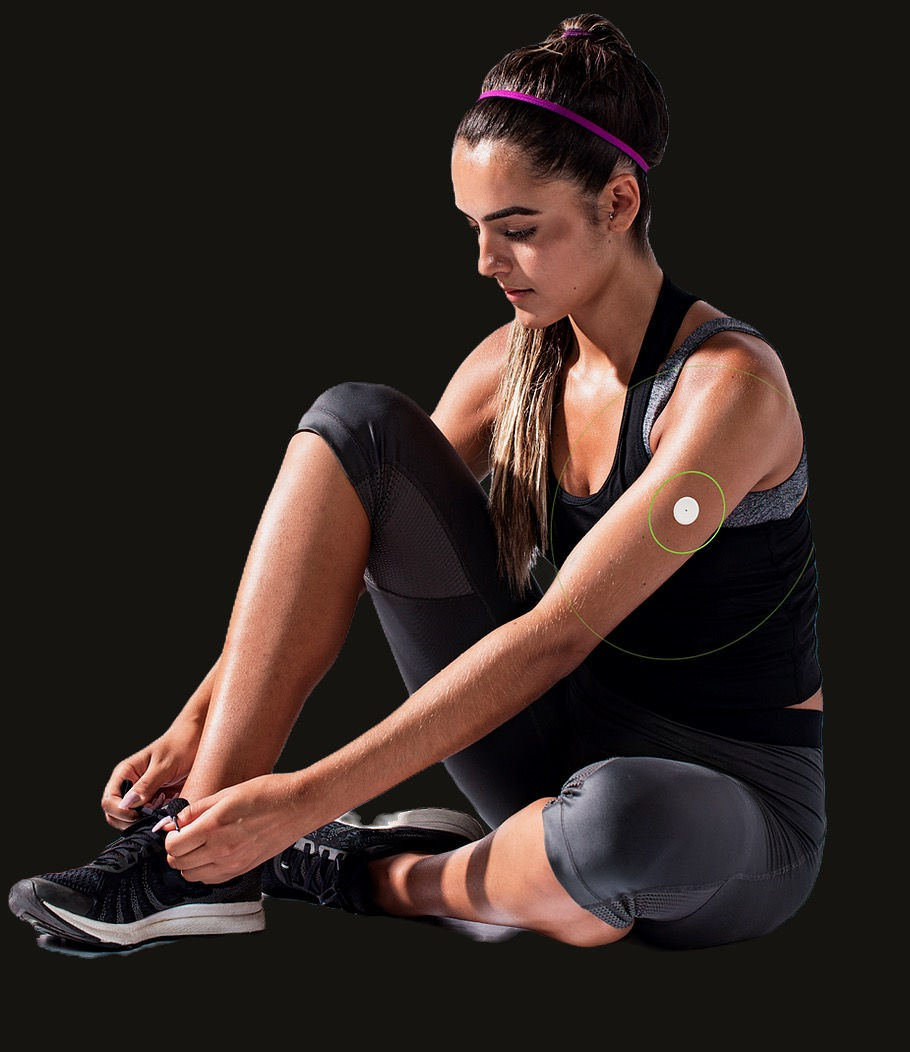
Recently, I had the opportunity to experiment with a 14-day trial of a fairly new company — NutriSense. What is NutriSense? NutriSense is one of a few companies offering continuous glucose monitors (CGMs) to the public. You may be familiar with CGMs, especially if you're familiar with people who use them for diabetic purposes. However, as of late, CGMs are taking the fitness industry by storm — targeting everyone from weekend warriors all the way up to elite-level athletes.
So What's a CGM?
A CGM is a quarter-size device that you apply to the back of your arm. On the side of the sensor that touches your body is a tiny needle that just barely punctures your skin, and trust me, you don't even feel it! By puncturing the skin, the needle takes very small samples of blood continuously throughout the day to measure your blood glucose levels. The sensor then stores this data for up to 8 hours, and sometime within that time frame, you scan the sensor using your phone to transmit the data to the NutriSense app. Pretty cool eh?
Before I get into what the data means and how to interpret it, let me first explain why a CGM can be an extremely valuable tool. Just like the Oura Ring, which I talked about in my previous article, every fitness tracker has one or more biometrics that offer insight into your health. As for CGMs, its biometric is blood glucose.
Monitoring your blood glucose levels is a great way to determine whether you're metabolically healthy or not, alongside other methods including measuring blood pressure, body fat percentage, as well as triglyceride and cholesterol levels. However, the nice thing about CGMs, unlike the other methods, is that they provide the opportunity for continuous measurement rather than just a single snapshot in time. As a result, CMGs not only allow the user the ability to see their baseline glucose levels, but also allow the user to experiment with how different habits and foods affect their glucose levels throughout the day — more on this later in the article.
So what if you're not metabolically healthy? Well, being metabolically unhealthy puts you at a much higher risk for developing many conditions including:
Diabetes
Heart Disease
Kidney Disease
Stroke
Vision Problems
Nerve Problems
You can now see the risks of being metabolically unhealthy, but how do you improve your metabolic health? — just as you would when trying to improve your recovery. Some, but not all of these habits, which I discussed in my previous article, include:
Eating high-quality foods. Try thinking back to what our ancestors ate and try to implement this type of ancestral diet, which includes foods such as grass-fed and pasture-raised meats, animal fats, dairy, and eggs, as well as moderate amounts of fibrous vegetables, berries, and honey.
Frequent movement throughout the day. Try implementing 15-minute walks in the morning and postprandially after dinner, as well as utilizing a standing desk and working-in mini-workouts throughout the day, such as by performing 20 kettlebell swings, push-ups, or any other exercise that can get you breathing a little harder. In addition, try including occasional bouts of intense exercise throughout the week that targets all areas of fitness, including mobility, endurance, strength, and power.
Getting high-quality sleep. Try winding down earlier at night as well as going to bed and waking up at the same time each day. Also, focus on improving your sleep environment by eliminating blue light, as well as making it dark, quiet, and cool.
Okay, okay, so you now know how to improve your metabolic health, and you also now know the risks of not doing so, but how do you interpret your data from NutriSense to determine whether you're metabolically healthy or not? Well, that's exactly what I want to devote the majority of this article to discuss, so let's hop right in!
What Data is Actually Important?
Just like how resting heart rate (RHR) doesn't always have to be low during the day to indicate good health, since raising it by stressing your body through exercise and other means can be beneficial, so is the case with blood glucose, which is why context is important. However, let's say you want a general plan for determining your metabolic health. Well, then there are three main factors you want to pay attention to — mean blood glucose, max postprandial blood glucose, and the duration of elevated postprandial blood glucose.
1. Mean Blood Glucose
Interpreting mean blood glucose (measured in mg/dL) can be tricky, mostly due to the fact that it can vary from person-to-person depending on the diet he or she is eating. However, for the most part, a healthy fasting blood glucose (no food for 8 hours) falls between 77-99 mg/dL and a healthy postprandial blood glucose (2 hours after a meal) is less than 140 mg/dL. You're probably wondering why neither of these measurements is mean blood glucose? Well, the fact of the matter is that fasting blood glucose and postprandial blood glucose have fairly established ranges for what's healthy and what's not, while mean blood glucose on the other hand… not so much. However, the nice thing is that you can get a fairly good approximation for a healthy mean blood glucose by simply averaging the upper end of fasting blood glucose (99 mg/dL) and the upper end of postprandial blood glucose (144 mg/dL). When you do so, you end up with an approximate upper end of 121.5 mg/dL for mean blood glucose, meaning anything under about 120 mg/dL could be considered a healthy mean blood glucose value.

When you take a look above at my mean blood glucose average from the past 14 days from the NutriSense app's analytics section, you'll notice mine is 105.4 mg/dL. Now, to me, I still consider this somewhat high for a mean blood glucose, but it can be attributed to two major factors. The first, and simplest reason, is that I took the past 14 days to experiment and see what would or wouldn't spike my blood glucose. So naturally, I'm implementing habits and eating certain foods that I normally wouldn't implement on a day-to-day basis. However, the second, and more important factor, is the diet I'm eating. Remember earlier when I said that mean blood glucose can vary from person-to-person depending on their diet? Let me explain.
There's a major distinction between pathological insulin resistance and physiological insulin resistance. Pathological insulin resistance is what most people think of and associate with high blood glucose levels. This phenomenon occurs when a person is — say it with me — metabolically unhealthy. As I explained earlier, whether you're eating a poor diet, not moving enough, or not getting enough quality sleep, you can ensure that any and all of these factors is going to negatively impact your metabolic health to some degree.
Take for instance someone that goes out to the bars one night, has a few alcoholic drinks that are also sugary, and consequently gets poor sleep as a result. Well, that example is exactly what happened to me one night. Now, what do you think my results looked like the following day? You don't have to guess — just take a look above. The figure on the left shows a typical day where my mean blood glucose is about where it should be. However, the figure on the right shows a day following a night of consuming alcoholic, sugary drinks in combination with sleep deprivation. You can clearly see that the poor habits definitely had a negative, pathological impact on my mean blood glucose levels the following day. Isn't that crazy? — the habits you do one day can significantly impact your glucose levels the next day.
What's even more interesting is that the following week, when I consumed alcohol, but rather had less sugary, alcoholic drinks combined with electrolytes, my mean blood glucose levels were significantly lower than before. You can definitely see, as compared to a typical day for me shown in the figure on the left, my mean blood glucose from a night of less sugary, alcoholic drinks combined with electrolytes, as shown in the figure on the right, was definitely closer to that baseline. So what can we conclude from this? Possibly the fact that bad habits and poor food choices (i.e. alcohol, sugar, etc.) have a compounding, negative pathological effect on mean blood glucose the following day. So by limiting these detrimental habits and food choices, you can also reduce these negative, pathological impacts.
On the flip side, one interesting finding was the effect of giving blood. Again, compared to a typical day in the figure on the left, you can see there was far less pronounced spikes the day after giving blood as shown in the figure on the right. Even my dinner, which was the last major spike in the right figure, barely spiked. So unlike alcohol, we can see giving blood may have, instead, a beneficial effect on mean blood glucose.
Furthermore, physiological insulin resistance occurs when the body has less access to glucose, or in layman's terms, when you restrict carbs and follow a relatively carnivore-ish type diet — which is what I primarily follow, aside from the occasional weekly carb refeed. What's happening is that when you restrict the body of glucose, the body as a whole, other than the brain, begins to refuse to take up glucose in an effort to spare glucose for the brain. This phenomenon is known as the "glucose sparing effect," and is one of the body's natural, built-in survival mechanisms.
The reason behind my choice to limit carbs aside from a weekly carb refeed deserves an explanation, but it's simple — high amounts of carbs combined with high amounts of fats in a single meal leads to excess production of lipopolysaccharides (LPS) in the blood, which are toxic. So if you're eating a high-fat diet, which is beneficial if you're eating the right kinds of fats, which I already discussed, you want want to limit carbohydrate consumption for the most part. I say "for the most part" because restricting carbs for too prolonged a period of time can lead to electrolyte imbalances, which is the reason why I still implement a weekly carb refeed.
Regardless, those who follow a relatively low-carb diet, like me, naturally have a slightly higher mean blood glucose. In addition, when you do end up consuming carbs, like during a weekly carb refeed, you can expect glucose spikes to be slightly higher as well since the liver is now taking up the glucose slower, again, in order to spare it, which ultimately increases mean blood glucose as well.
As you can see, context is everything. You have to understand what's affecting a person's blood glucose levels beyond simply assuming high blood glucose values always means a person is metabolically unhealthy. So sure, shoot for a mean blood glucose below about 120 mg/dL. However, I personally don't think mean blood glucose, or even fasting and postprandial blood glucose, are ideal for interpreting metabolic health unless viewed in conjunction with the other factors. In fact, what's most important is our third factor. However, for now, let's move onto our second factor — max postprandial blood glucose.
2. Max Postprandial Blood Glucose
Like mean blood glucose, I don't think max postprandial blood glucose is ideal for interpreting metabolic health either. However, when viewed in conjunction with the other factors, it can offer some additional insight.
Max postprandial blood glucose (measured in mg/dL) is what is sounds like — the highest blood glucose reading following a meal. As for the reference range, like I mentioned earlier, you want to shoot for below 140 mg/dL 2 hours after a meal. However, again, like mean blood glucose, this value isn't a one-size-fits-all. In fact, this value not only varies from person-to-person, but also can significantly change from day-to-day, and even meal-to-meal.
Why? Well, you can actually manipulate and lower your blood glucose spikes by implementing beneficial habits around your meals. Two of the most influential habits include:
Cold Showers
High-Intensity Exercise (and other environmental hormetics for that matter)
Since cold showers lower your blood glucose, I believe it's more beneficial to implement them after a meal — especially a meal containing carbohydrates. You can see this concept demonstrated above. The second major spike in the figure on the left illustrates the consumption of a meal containing carbs with a cold shower prior to that meal. Now take a look at the figure on the right — the largest spike is a meal containing even more carbs than the figure on the left, but this time, a cold shower is taken after the meal. It's easy to see that by taking a cold shower after the meal, the glucose spike is much lower, even with that specific day being impacted by alcohol consumption from the day prior.
On the flip side, high-intensity exercise and heat stress, which are both examples of environmental hormetics, increase your blood glucose, but rather in a beneficial way. By implementing them before a meal, they can actually make your more insulin sensitive, resulting in lower blood glucose spikes from a meal consumed following these events. You can see both of their effects from the figures above. The left figure's major spike illustrates a high-intensity exercise session, but it can be seen that the next major spike, which is dinner, is much less pronounced, especially since a cold shower is implemented before that meal unlike the left figure in the last pair of images. In addition, the right figure's major spike illustrates heat stress, which in this case is an infrared sauna session. However, it can be seen that the spike following the heat stress, which is dinner, again, is much less pronounced, especially since a cold shower was implemented before this meal as well.
What else? Back to the day I gave blood, you could also consider this an example of an environmental hormetic as well, since I guess you could replicate it by bleeding out… please don't. But either way, you can see the figure on the left was the day I actually gave blood shown by the two major spikes — and my blood glucose sure did spike. However, as I mentioned earlier, which you can see again from the figure on the right, my mean blood glucose levels were way lower than usual the following day.
Okay, so you know what positively impacts max postprandial blood glucose, but what negatively impacts it? — the same negative habits I mentioned earlier in this article. You know... high carb consumption inconsistent with an ancestral diet (i.e. white rice rather than berries and honey) as shown by the largest spike in the left figure, as well as, surprisingly coffee, in addition to sugary drinks, which both caused the largest spike in the right figure.
One interesting point is that the sugary drink also contained alcohol, but once blood glucose spiked, it plummeted. Does that mean alcohol is beneficial since it decreased? — not at all. You see, alcohol is a special case when it comes to how blood glucose is affected. The liver plays an important part in managing blood glucose levels. However, when alcohol is consumed, it is seen as a toxin by the body. As a result, the liver prioritizes removing the toxin, which consequently leads to poor management of blood glucose, leading to a significant decrease in blood glucose, and can even lead to hypoglycemia, which is even more dangerous. This decreasing trend is common in occasional drinkers, though heavy drinkers or those that are metabolically unhealthy may notice higher blood glucose levels instead. Woo hoo, I used alcohol to show I'm metabolically healthy!
So, as you can see, just because your max blood glucose is high doesn't necessarily mean you're metabolically unhealthy. Unless your glucose levels are through the roof and exceeding 140 mg/dL following meals that contain no carbs, I think you're fine. Then again, max postprandial blood glucose can clearly be affected by other factors besides food, which is why you have to know the context behind what's causing a large spike.
For example, if it's exercise and other hormetic stressors that are causing large spikes, then these large spikes can actually be beneficial. On the other hand, if you're getting large spikes from meals, especially those without carbs, you may have a problem. On the flip side, if you're taking cold showers that's causing drops in blood glucose, these drops can be beneficial. However, if your blood glucose is dropping due to alcohol… not so much. This is the primary reason, like mean blood glucose, I don't think max postprandial blood glucose is ideal for interpreting metabolic health since it can be impacted and skewed by so many factors. That's why I saved the best factor for last — duration of elevated postprandial blood glucose.
3. Duration of Elevated Postprandial Blood Glucose
So why do I keep saying that this factor is the best? It's simple — because there's really not much that significantly alters the duration of your elevated postprandial blood glucose beyond simply being metabolically unhealthy. This is the fundamental reason I think this factor is such a good indicator of metabolic health. Regardless, the duration of elevated postprandial blood glucose is usually measured in hours (hrs), and a healthy range to shoot for is for your postprandial blood glucose return to baseline within 1-2 hours following your meal.
However, there is one factor that does help you manage the duration of elevated postprandial blood glucose ever so slightly, and that factor is postprandial walks. Similar to how cold showers taken after a meal helps lower max postprandial blood glucose, postprandial walks helps lower the duration of elevated postprandial blood glucose. Take the two figures above for example. The figure on the left illustrates a day I took a cold shower prior to a meal, then consumed the meal illustrated by the second large spike, which was then followed by a postprandial walk, resulting in a very quick decrease in elevated blood glucose back to baseline. Conversely, the figure on the right illustrates a day I, again, took a cold shower prior to a meal, then consumed the meal illustrated by the major large spike, however, this time no postprandial walk occurred. As a result, you can see the major spike was "wider," meaning it took longer for my elevated blood glucose to return back to baseline.
Now, mind you, the difference in these durations is minor. Clearly, postprandial walks do help. However, since both meals' glucose levels decreased quickly, this is the primary reason I think paying attention to the duration of elevated blood glucose levels is the best way to determine whether you're metabolically healthy or not.
So what would this metric look like for someone that's metabolically unhealthy? — well it sure wouldn't look like mine. Even when looking at my worse case from the figure on the right, it only took about an hour for my blood glucose to decrease from its max back to baseline. On the contrary, someone who is metabolically unhealthy will have an elevated blood glucose for many hours after consuming a meal, and surely more than 1-2 hours like I previously mentioned. This is what's known as hyperglycemia, and again, is what I think is the primary indicator of someone who is metabolically unhealthy. So, to recap, pay real close attention to this factor, and shoot for your elevated postprandial blood glucose to return back to baseline within 1-2 hours of consuming a meal.
Summary
Yea… that was a lot. But it's important that you know how to interpret your blood glucose because as I said earlier, context is everything. Blood glucose is clearly not one-dimensional and can be impacted by a variety of factors. As a result, you have to know what's causing changes in your blood glucose levels before you jump to conclusions about your health.
That being said, focus on what the duration of your elevated blood glucose looks like first and foremost. This will help you get an general idea of your baseline metabolic health. Then, once you have an idea of your baseline, observe what both your mean blood glucose and max postprandial blood glucose look like on a day-to-day basis, and adjust your habits and diet accordingly to make improvements to your health. It's easy — you see, whether you use an Oura Ring or a CGM from a company like NutriSense, once you know how to interpret your data, it just comes down to experimentation and discipline in order to make the changes required to improve your health. It's always a learning curve, so enjoy the process, and your health will appreciate it in the long run!
Resources
Books:
Articles:
Products:


Comments